This site has been inspired by the work of Dr David Korten who argues that capitalism is at a critical juncture due to environmental, economic and social breakdown. This site argues for alternatives to capitalism in order to create a better world.
From forced eviction to restrictions on access to resources, conservation practices have long been tied to violence against the indigenous peoples that live in forest areas. In recent years, we witnessed an exponential increase in conservation-related violence across the world.
Today, as conservation efforts become more and more militarised, state-sponsored actors are not only evicting and restricting the movements of indigenous community members, but also killing them for allegedly trespassing on their own ancestral lands.
In India, conservation violence seems to be on the rise.
On June 5, a 40-year-old villager named Roopchand Sonwane was beaten to death by Forest Department Officials in the central Indian State of Madhya Pradesh, near Pench Tiger Reserve. Sonwane was simply collecting firewood, but officials suspected he was preparing to fell teak trees so they detained him and took him to a forest ranger's residence. At the residence, they beat up and killed the villager and later burned his body to destroy evidence.
In November 2017, two people were killed and five others injured when police opened fire to disperse protesters demanding compensation before they move out of areas near the Kaziranga National Park as part of a state-sanctioned eviction drive.
Also in November last year, over 700 families were rendered homeless by a similar eviction drive in the Amchang Wildlife Sanctuary located in the northeast Indian state of Assam. A posse of 1,500 policemen carried out the eviction razing houses, demolishing schools and places of worship, and injuring women and children in the process.
Since 2007, Forest Department Officials shot and killed at least 13 villagers in the Buxa National Park, a Tiger Reserve situated along the foothills of the eastern Himalayas in the eastern Indian state of West Bengal. Officials claimed the killed villagers were part of a so-called "timber mafia".
Elsewhere in the Indian states of Karnataka, Chhattisgarh, Madhya Pradesh and Maharashtra, coercive relocation of forest communities is continuing in the protected areas of Nagarhole, Achanakmar, Udanti, Tadoba Andhari Tiger Reserve, Melghat, and Pench.
For decades, India's Forest Department officials - aided and abetted by the omnipotent National Tiger Conservation Authority (NTCA) - have been implementing a violent policy of "people-less conservation" resulting in human rights violations.
But, of course, people-less conservation is not a problem specific to India. Across the world, governments have long been using the need for the conservation of land and wildlife as an excuse to remove Indigenous communities from their homes, sometimes with the support of large international conservation groups.
Targeted relocation and eviction of indigenous and local communities living in biodiversity-rich ecosystems for conservation, have, over the years, brutalised, belittled and decimated them. Communities have gone extinct, their traditions, language and culture vanishing forever.
Take the example of San and Bakgalagadi people who have been removed from their ancestral lands to make way for the Central Kalahari Game Reserve in Botswana or the Miwok people who were forced to leave the Yosemite National Park in California. Maasai of eastern Africa were similarly pushed off their traditional grazing lands to make way for the parks that foreign tourists enjoy today. The Dongi-Dongi people were evicted from their homes in Sulawesi, Indonesia and the Banding Agung were removed from the Bukit Barisan Selatan National Park in Sumatra.
One study estimates that as many as 14 million people in Africa alone have become "conservation refugees" since the beginning of modern conservation efforts in the 19th century. In India, the government also admits pushing over a million people out of National Parks, mostly to protect tigers.
Today, most governments around the world imitate this Western style of people-less conservation and continue to disregard community-based conservation systems where communities can coexist with wildlife.
But globally, there is a wealth of knowledge and documentation around Community Conserved Areas (CCAs) where local communities have championed biodiversity protection.
A growing body of scientific evidence shows that forest communities and indigenous peoples actively conserve and restore biodiversity in their territories, with women often taking the lead in such conservation efforts. Studies show that such conservation governance systems are often more effective in protecting biodiversitythan systems that prioritise formation of state-controlled conservation areas.
Moreover, when protected areas overlap with the traditional territories of indigenous communities, they harm the communities' health, livelihoods and spiritual wellbeing. Protected areas threaten essential aspects of the communities' resilience, such as their autonomy and self-management.
Community-based conservation systems protect the land and wildlife while also taking local people's rights, knowledge, culture and skills, as well as their right to land and territory into consideration.
Indigenous communities have conserved their territories for millennia through their own customary practices. They are closely connected to these ecosystems.
Therefore, the mainstream, militarised conservation model supported by states like India and often big international conservation NGOs must change. It must give way to a more humane and community-centred, managed and governed model of conservation that will not only protect our forests and conserve biodiversity, but will also secure livelihoods, provide shelter and ensure the well-being of millions of people who call forests their home.
The views expressed in this article are the author's own and do not necessarily reflect Al Jazeera's editorial stance.
Typhoon Haiyan in the Philippines - 2013 (Photo: AP)
by Mark Hertsgaard, Common Dreams: https://www.commondreams.org/views/2017/06/02/donald-trumps-withdrawal-paris-accords-crime-against-humanity President Donald Trump confirmed his status as climate denier in chief today, guaranteeing his place in history as an enemy of both science and humanity. Trump’s withdrawal of the United States from the Paris Accord on climate change will not stop the rest of the world from continuing to advance toward a clean-energy future. Solar, wind, batteries, and other technologies are growing tremendously fast, rewarding investors and employing far more people than the heat-trapping fuels of the past. Three million Americans now work in the clean-energy sector, more than the oil, gas, and coal industries combined. California Governor Jerry Brown, who heads the world’s sixth-largest economy and a hot spot of green-energy innovation, insisted that Trump’s efforts are doomed to failure. “The momentum is all the other way,” Brown said, “and I think Trump, paradoxically, is giving climate denial such a bad name that he’s actually building the very [climate action] movement that he is [purporting] to undermine.” But no one should pretend that it does not matter when the world’s biggest economy rejects an agreement that put unprecedented international support behind ambitious climate action. By removing rules and regulations that require polluters in the United States to change their ways, Trump’s repudiation of the Paris Accord will slow progress at the very time when humanity’s survival requires faster action than ever. “Crimes against humanity” is a phrase to use with caution, but it fits Trump’s repudiation of the Paris Accord and indeed his entire climate policy. Timothy Wirth, who as the under secretary of state in the Bill Clinton administration negotiated the Kyoto Protocol that sought to limit global warming, has said that those who deny the well-established science of climate change “ought to be tried for crimes against humanity.” Wirth told The Nation after Trump’s withdrawal from the Paris Accord that he stood by his remark, adding that the president’s action was “a stunning moral abdication of responsibility to future generations.” To refuse to act against global warming is to condemn thousands of people to death and suffering today and millions more tomorrow. This is murder, even if Trump’s willful ignorance of climate science prevents him from seeing it. History will not be so blind. Of course, the Paris Accord is far from perfect: Its emissions reductions are voluntary and do not go far enough, at least not yet. Nevertheless, the accord commits the world’s governments to leave behind oil, gas, and coal by mid-century—a historic shift. It commits them to limit global temperature rise to the 2 degrees Celsius that scientists say is the maximum compatible with civilization as we know it, and to aim for the 1.5 Celsius limit that poor and island nations rightfully regard as essential to their survival. Thus the accord provides citizens, activists, and the rest of civil society worldwide with a strong mandate they can use to hold governments and corporations to account. Thanks largely to such pressure from civil society, reinforced by the growing recognition of global elites that the climate crisis is indeed dire, the Paris Accord has already accelerated real climate progress. Some of the greatest change is underway in China, which is rapidly shutting down coal plants and mines and adding solar and wind plants, notwithstanding Trump’s shameless lies at the White House about China’s supposedly doing nothing. Meanwhile, the leaders of China and the European Union announced that they remain committed to the Paris Accord and plan to intensify cooperation on clean energy, a huge and growing global market that US businesses will now find harder to navigate. So much for America First. Remarkably, Trump did not deny climate science outright in his remarks in the Rose Garden. Reading from a prepared text, he refrained from repeating his favorite falsehood about climate change—that it is “a hoax” invented by the Chinese to undermine the US economy. Perhaps his aides have learned this much: Although fooled for decades by the disinformation campaigns funded by such polluters as ExxonMobil and voiced by Republicans in Congress, a majority of Americans now realize that climate change is real, caused by humans, and dangerous. Trump instead portrayed his withdrawal from the Paris Accord as a matter of economic fairness and patriotism, of standing up for American workers, businesses, and taxpayers who, he said, are being taken advantage of and, worst of all, laughed at by foreigners who foisted a “very unfair” deal on the hapless negotiators of the Obama administration. This narrative could be consistent, however, only by ignoring what is now a truism within the business press and financial class: The jobs, profits and market opportunities of the future are in clean energy—not oil, gas, and coal. Indeed, two days before Trump’s announcement, the shareholders of ExxonMobil delivered a stunning rebuke to the oil giant’s management: BBy a 62 percent majority, they voted to require the company to produce annual reports on how it will remain profitable in a future when governments and science will limit oil and gas production. But make no mistake: Trump’s speech was climate denial with a vengeance. At this point in the climate crisis, the science is terrifyingly clear. Global emissions of heat-trapping gases must peak by 2020 if the 1.5C target is to remain feasible, by 2030 for the 2C target. Physics does not compromise; it does not do the deals so beloved by Trump. And that means that pledging to unleash America’s “abundant domestic energy” sources—by which Trump explained he meant oil, gas, and coal—will make it immensely more difficult to honor those temperature targets, even if the rest of the world continues galloping forward. In human terms, this increase in US energy production will mean more of the killer cyclones that killed hundreds and left hundreds of thousands of people homeless in Bangladesh and Sri Lanka this week. It will mean more of the massive storms such as Hurricane Sandy that leveled vast parts of New York and New Jersey days before the 2012 presidential election and inspired Businessweek’s cover headline, “It’s Global Warming, Stupid!” It will mean that the extinction crisis that has already claimed countless plant and animal species will intensify, furthering impoverishing the planet both ecologically and spiritually. All of this is a crime against humanity—and against Earth. Author Mark Hertsgaard (markhertsgaard.com), a fellow of The Nation Institute and The Nation's environment correspondent, is the author of five books, which have been translated into sixteen languages. His next book, Living Through the Storm: How We Survive the Next 50 Years of Climate Change, is forthcoming from Houghton-Mifflin.
I bet you think of climate change as an environmental issue.
It’s mainly about the atmosphere and polar bears and carbon, right? Well, not really. I mean yes – it is about those things, but mainly it’s about human rights and politics. If that doesn’t make immediate sense to you, then this post is for you. Here’s why climate change is about human rights:
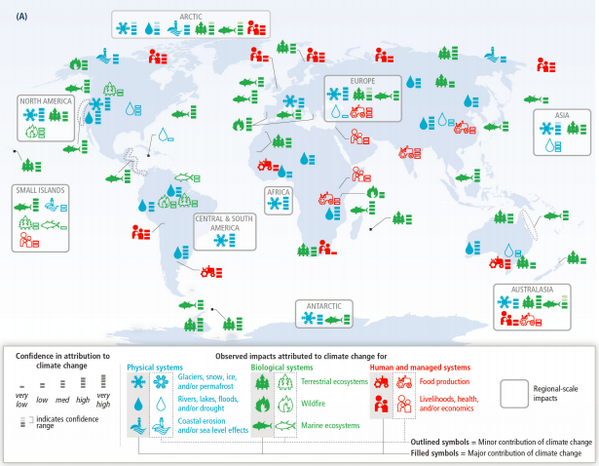
Responsibility for climate change, its impacts and the capacity to adapt to it are unequal
Climate change deepens every existing social inequality
Climate action has huge potential to enhance equality and human rights
Not convinced yet? Let’s explore each of those points…
Responsibility, impacts and capacity are uneven
Responsibility for climate change
The roots of climate change go back to the drawn of the Industrial Revolution, which kicked off in the UK in the late 1700s and quickly spread around North Western Europe and then the world. The discovery of coal, and later oil and gas, changed everything.
These three fossil fuels are fossilised organic matter from millions of years ago, hugely energy-dense, which release their pent up energy when burned. Being made from ancient dead plants and animals, they are full of carbon, and when burnt, that carbon goes into the atmosphere. The extra carbon acts like an insulating blanket, blocking heat from radiating out to space, making the Earth warmer. This is known as the “greenhouse effect” and is vital to life. Without it we’d be absolutely freezing, like a planet sized fridge-freezer. But when it comes to blankets, it’s not just ‘the more the better’ is it? You get too hot. And that’s what’s happening now.
Europe and later the other rich nations were blazing it up for decades before poorer countries came on the fossil-burning scene, and by the time industrialization took off in the rest of the world (which is still ongoing) we had already chucked enough carbon into the sky to start changing the Earth’s entire climate. Until the 1960s the top emitters were all rich industrialized nations (with the UK at the top of that list for roughly a century after kicking off the Industrial Revolution). In the mid 20th century China and Russia joined the big boys of carbon pollution. Today China is the biggest emitter, but it’s important to remember that:
They have well over a billion people, roughly one seventh of the world’s population
They manufacture a large proportion of the world’s goods
If you put it in per person terms instead, the biggest emitters are all rich countries, with Australia and the USA topping the list.
The point is, over the last 200-odd years, the vast bulk of the carbon emissions have come from the rich countries – Europe, North America, Australia, Japan. Apart from Japan they happen to be Western and white.
Impacts of climate change
The impacts of climate change are also uneven across the globe, and across each country. The most severe climate impacts are expected across tropical regions – which happen to be in Africa, Asia and South America – as they are already hot and stormy. The more arid parts of Australia and USA will also be seriously affected by heatwaves, droughts, storms and wildfires. Low-lying and coastal areas will be worst hit by rising sea levels – there are small low-lying island states which are literally already disappearing under the sea. Most of the countries hit first and worst by climate change are poor, and all the poorest regions of the world are expected to have very severe impacts.
It’s worth noting that even at the catastrophic 4 degrees of warming that sees most of the world turn into a desert or a floodplain, the UK remains “habitable”. That doesn’t mean we’d get off scott-free, it would still see floods, droughts, sea level rise, water shortages and food prices rocketing. (And those impacts would be mostly borne by the British poor – who else?) But it would be an oasis of liveability compared to the rest of the world.
It’s also worth noting that even 2 degrees of warming, which politicians have agreed as the line in the sand, would still be an absolute disaster for Africa. Yeah, looks like the West is screwing over Africa yet again. Shameful.
The point is, the countries that have done the absolute least to cause climate change, and benefited the least from industrialization, are expected to be some of the hardest hit. If that isn’t injustice, I don’t know what is. But wait, there’s more…
Capacity to adapt to the impacts
The final in the trio of shit which is climate injustice, is the capacity to adapt.
This is where the stark differences in the most affected countries comes into play. Australia and the USA will both be badly hit, and are actually already seeing impacts, but the difference between them and the others is that they are rich countries. Their governments have budgets for public spending, they have emergency services, they have a welfare state (kind of – I’m looking at you America), they have strong institutions and infrastructure. These tools of survival mean that while impacts may be dire, the government has some capacity to respond and invest in adaptation.
Compare this to, for a random example, Chad. In land-locked northern Africa with a sizeable desert region and a non-desert arid region that runs the risk of becoming desert, they’re one of the many countries that will be seriously impacted, like USA and Australia. The difference in that Chad is one of the poorest and most corrupt in the world. Most people are subsistence herders and farmers, earning their livelihood directly from the land – meaning they’re incredibly sensitive to environmental change. And they don’t have stored wealth or a welfare state to fall back on. Also, they’re biggest export is crude oil, so when that’s no longer a viable industry they’ll likely be even poorer.
The problem for countries like Chad, is that they’re struggling as it is, so literally cannot afford to invest in adaptations for climate change. They simply don’t have the cash, can’t borrow on favourable terms, often don’t even have the policy freedom, they lack the institutions and infrastructure they need, in some cases officials are corrupt and there’s all too often political/religious/ethnic violence to contend with. What a shit-storm. And that’s before you add in the increased risk of actual storms.
So, many of the countries most effected by climate change are not only the ones who’ve done the least to cause it and reap the benefits of carbon-heavy industry, they’re also the least capable of adapting to it.
Climate change deepens existing inequality
The second key reason why climate change is about human rights, is because due to the uneven nature of its cause, impacts and adaptability, it tends to deepen existing inequalities.
I have already alluded to the raced nature of climate change. Zoomed out, it looks awfully like a case of white people screwing over everyone else. Sorry to be so blunt, but it’s true. As discussed above, the (mostly) white rich nations have by far the most historical responsibility for causing climate change, have benefited the most from carbon-heavy industrialization, and yet it is the mostly black, Asian and Latino countries that will see the most catastrophic climate impacts, despite being poorer and less able to cope with them. Pretty damn racist, when you put it like that.
But there’s more: obviously many countries are now very multicultural, so race is relevant within countries, too. Case in point of course is the USA: due to the history of racism, black and Latino people are more likely to live in polluted areas and less likely to be protected by the state. Remember Hurricane Katrina. A much higher proportion of the people who were stranded, lost their home or lost their lives happened to be black. Also, sometimes crisis can push people into crime. It’s well known that American police and courts are massively harsher to black criminals than white.
Of course, you could say it’s not really a case of race, but class. That’s kind of true, although you can’t ignore the reality that people of colour tend to be poorer on average. (I wonder why that is? Hmm… *Cough* history of massive racism *cough*). The two are entwined. Anyway, arguably the clearest reason climate change is political is because it’s all about class and power. Like usual, the poor are most at risk simply because they are poor so don’t have the required capacity to adapt. They also have less political power so governments are prone to policymaking that serves the richer classes instead. Whenever a crisis hits, it’s usually the poor who bear the brunt of it.
Climate change can also deepen gender inequality. This isn’t too relevant in the West, but many poor and rural societies have a very gendered division of labour that sees women doing work that is hit by climate change first and worst. For example, women may be gathering water, growing vegetables and gathering firewood, while men of the community are travelling to do paid work in the city or working on an industrial cash-crop farm. In these cases women will have their work more badly hit. Depending on how much understanding of climate change there is in the community, they could potentially be blamed for their lower yields and be seen as less capable, leading to a loss of power and worse prejudice against them. Also existing issues like women having less access to land, less legal rights and social inequality could see single and widowed women finding it harder to cope with climate impacts.
Basically, without a huge concerted effort to ‘level the playing field’, climate impacts are likely to deepen existing inequalities.
Climate action has huge potential to enhance equality and human rights
Lastly, climate change is political because it doesn’t necessarily need to deepen inequalities; it has the potential to do the opposite. The movements for climate justice and environmental justice are about healing deep wounds of injustice and oppression via environmental action. Climate action can, if done right, be a powerful force for making a society more equal and advancing human rights. It can be a catalyst for positive social change.
Take my native UK as an example. A climate strategy could include bringing high-tech green industries to the North of England that has never recovered from the deindustrialization of the 1980s; it could see parks, urban farms and green spaces bought to inner city areas; it could see run-down coastal towns becoming hubs for off-shore wind and marine energy; it could see struggling farms reinvigorated with an increased demand for local food and extra income streams from ecotourism and renewable energy; it could see public transport improve and also become more affordable. Such schemes wouldn’t only lower carbon emissions, they’d also create millions of good jobs, spread wealth more equally across the country, improve public health, regenerate poor neighbourhoods and improve quality of life for everyone – especially those on lower incomes.
Also look at the global scale. Climate action has the potential to reduce the sickeningly-enormous gap in living standards, wealth and power between the rich and poor nations via transfers of money and tech. Such actions would not be charity. They would be a good start to paying off the huge debt of injustice discussed earlier. We’re already seeing a glimpse of this: there is an agreement for rich countries to send $100 billion a year in climate funding to poorer countries. Unfortunately this hasn’t been done yet, but it has been signed into the Paris Agreement as a key target. Concerted climate action has the potential to make the world a much fairer place. This is what the climate justice movement is all about.
Sooner or later, we will be moving to a post-carbon world. It could be one in which the rich huddle in their guarded air-conditioned mansions while starving environmental refugees clamour at the gates. Or it could be a brighter more beautiful world, one where we deal with the impacts of climate change with solidarity, cooperation and compassion. What that would look like is uncertain, there are so many possibilities. Personally I see a world of egalitarian high-density high-tech globally-connected eco-cities surrounded by newly planted forests.
So, climate change is about way more than carbon. It’s about who lives and dies, who survives and thrives, who has power and who is powerless. Change is coming whether we like it or not, but that change can be harnessed in dramatically different ways. And what determines what path we take, is politics.
Featured image: People being rescued after being stranded by Hurricane Katrina. (US Navy / Public Domain).