Monday, July 4, 2011

Lake Remediation - A Solution to Water Pollution

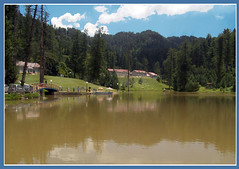
Banjosa LakeImage by M. Asif - AWAY ! via FlickrBy Bernard Novak

Lakes are an important part of our landscape and ecosystem. Lake pollution is a serious problem that affects many different aspects of life and nature. Left untreated, the effects of water pollution begin to spread and can be catastrophic to wildlife and the population in the surrounding areas.

Unfortunately, due to misconceptions of effective garbage disposal, ineffective sewage treatment, agricultural/horticultural run-off from intensive farming, and pollutant disposal, many lakes around the world are contaminated with hazardous waste.

It was only in the early 20th century when people started to understand the negative effects that various forms of contamination were having on large natural bodies of water. Nutrient run-off, sewage, industrial waste, garbage and many other pollutants found their way into waterways with no consideration of what lay downstream.

This practice quickly had a negative impact on rivers and lakes and other water bodies in populated areas and in areas of intensive farming. By the time people realised what effect this contamination was having, it was already too late to reverse a lot of the damage.

There are three different pollutant entry ways; point source pollution, non-point source pollution and atmospheric pollution. Point source pollution refers to when pollutants enter a body of water through a specific point. This is one of the easiest entryways to treat or eliminate, as it can be traced back to a specific spot.

Nonpoint source pollution comes from a number of sources and is extremely difficult to get under control and normally requires blanket regulation and policing by environmental authorities to achieve compliance. Atmospheric pollution, like nonpoint pollution, comes from numerous sources but falls from the sky instead of attached waterways.

In New Zealand, most of the water pollution comes from our agricultural sector and, in urban areas, damaged or ineffective/overloaded sewerage systems have continued to find their way back into our waterways.

Reversing the damage is a difficult process, but thanks to lake remediation techniques like the phosphate water treatment product Aqual P, we can start to reverse the damage done to polluted water systems Phosphate water treatment Aqual P uses a process of adsorbing phosphorus found in large water bodies by adding a modified natural volcanic zeolite mineral to the sediment layer and/or the water column.

The natural volcanic mineral is loaded with a phosphate scavenging polymer, which is locked onto the mineral. This modified zeolite then binds with phosphate and other anions permanently, allowing them to be permanently dropped out of the water column.

With this method, we are able to remove pollutants and allow waters to be usable once again. Phosphate water treatment is commonly used to remove ammonia and other prominent pollutants in drinking water, swimming pools, farm dams and fish ponds. On an industrial scale, full lake remediation is possible.

Thanks to new techniques, water treatment is becoming more and more effective. Reversing the damage of water pollution can save ecosystems that rely on lakes, rivers and other bodies of water. Saving these waters means the preservation of species, the prevention of the spread of disease, and to again enjoy our rivers and lakes in their once natural state.

Zeolite and expanded Perlite is used in Iron filtration and heavy metals removal. BPM can ammend zeolite for the treatment of phosphate in lakes & water ways. Find out more about phosphate water treatment here.

Article Source: http://EzineArticles.com/?expert=Bernard_Novak
http://EzineArticles.com/?Lake-Remediation---A-Solution-to-Water-Pollution&id=6390253
Enhanced by Zemanta

Sunday, July 3, 2011

Inspiring the Nation - First the Moon, Now Cleaner Energy at an Affordable Price

Logo of the United States Department of Energy...Image via WikipediaBy David Ritter

Fifty years ago, in 1962 President John F. Kennedy challenged the nation's greatest scientific and business leaders to "put a man on the moon by the end of the decade." We rose to the challenge and we hit that goal in the summer of 1969.

Fast-forward to the 21st century, and we are facing a new challenge: Reduce greenhouse gas emissions dramatically very soon, or face more extreme weather patterns and destructive, volatile weather events due to climate change.

And what better way to promote rapid advancement in technology than to throw down the gauntlet. Speak out loud an outrageous goal, and challenge everybody to rise to the occasion.

CLEANER ENERGY AT AFFORDABLE PRICES

That challenge has now been issued for clean energy! The U.S. Department of Energy wants to reduce the cost of solar energy systems by 75% by the end of the decade. DOE has created a collaborative program called the SunShot Initiative, and the goal is to kickstart the solar industry with laser-focused research and design so that a decade from now it is self-sustaining with no taxpayer subsidies necessary, with competitive market forces working to spur innovation, growth and investment in a sector driven by greater consumer demand: cleaner energy at affordable prices!

I recently took a plane from Harrisburg International Airport via Dulles in Washington, DC to New Orleans, LA. Our return flight routed us through Chicago, IL. And I had the gift of a hot air balloon ride over Lancaster County for my 50th birthday on June 9th. Do you know what I noticed? Not much solar up on those roofs - but there are LOTS of roofs!

I would go so far as to say that, even though I saw a few solar arrays, we have virtually NONE right now, and this is a tremendous opportunity.

Cleaner, renewable energy not only reduces carbon emissions, but it creates good-paying jobs. It also reduces our reliance on foreign oil. And it is tapping a FREE resource that we don't have to drill for or do research to find; we just have to harness it.

Energy deregulation is spurring competition, which in turn is promoting innovations and improvement in the energy industry. And giving consumers and business owners the ability to choose their energy supplier is also creating a greater demand for cleaner energy.

CONSUMER DEMAND

To demonstrate how hungry consumers are for cleaner energy, look at the phenomenal growth of Viridian Energy, a socially responsible retail energy supplier that offers a cleaner energy at an affordable price. It far surpassed all its competitors who grew at an average of 58% from 2010 to 2011, by growing at a whopping 708%, simply by providing electricity that is at least 20% renewable, PLUS whatever is mandated by each state where they do business.

So, in Pennsylvania for example, the state mandate for Renewable Portfolio Standards is that 9.7% of suppliers energy must come from renewable sources in 2011-12, so Viridian's commitment for 100% of their customers is that they will provide cleaner energy that is minimally 29.7% from clean energy sources that are generated in our state or region. And they do without charging extra for it - in fact, it is less expense over every rolling 12-month period than the dirtier energy being provided by your local utility company!

So, I hope we are up to the challenge - I'm tired of record-breaking tsunamis, hurricanes, tornados, earthquakes and floods ... and we'll all breathe better!

David Ritter lives in South Hanover Township, Dauphin County, just outside Hershey PA. He is a freelance writer and an Independent Associate with Viridian Energy. He can be reached at davidritter@greenenergywithpurpose.com or (717) 856-3081
http://www.greenenergywithpurpose.com/

Article Source: http://EzineArticles.com/?expert=David_Ritter
http://EzineArticles.com/?Inspiring-the-Nation---First-the-Moon,-Now-Cleaner-Energy-at-an-Affordable-Price&id=6359882
Enhanced by Zemanta