Wednesday, August 24, 2011

Reintroduction or Conservation Projects?

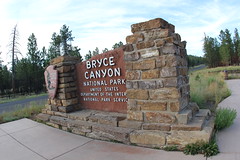
Welcome signImage by daveynin via FlickrBy Joanna French

There are pros and cons to each, but the ongoing debate of focusing efforts on reintroduction or conservation looks like something that is long going to continue. Here, we briefly consider if conservation organisations, government and non-governmental organisations (NGO's) should financially support reintroduction projects, or if the money could be better spent on other types of conservation projects.

Both reintroduction programmes as well as other types of conservation projects are very important and there is a balance that must be found in terms of resources given to each area. Indeed, reintroduction programmes alone will not remedy the situation that we are currently facing in terms of the ever decreasing numbers of species that live in their natural habitat.

If we first look at reintroduction, it can be seen that there are indeed benefits to reintroduction programmes and thus financial support is vital for them. In some instances, where there are only a few species remaining in their natural habitat, it is a good idea to try to reintroduce. Reintroduction gives species a 'fighting chance' of survival. It can also help preserve the biodiversity of the ecosystem.

Each species has its own role to play in the ecosystem and if some species are 'missing' it can throw the whole system out of balance. This can impact not only on flora and wildlife, but also on the local communities who rely on natural resources. Reintroduction is basically a way of trying to put right what mankind has done.

However, reintroduction cannot be considered in isolation, other types of conservation projects must run alongside any reintroduction projects if they are to prove successful.

An integrated approach should be taken to conservation projects - there is not one approach that can be used as a quick fix to the declining number of species found in their natural habitat. However, there are a number of issues that have an effect on populations and looking at these can then lead on to ways in which to help negate or at least diminish their impact.

One reason that some species are decreasing in number is due to loss of their natural habitat, infringement from logging and other activities, resulting in less area in which to move around and a scarcity of food resources. Deforestation is done for a number of reasons, both for large commercial gain, but also for personal use by often poor rural communities.

There is a great deal of profit that can be made for companies using natural resources, this is mainly down to demand from other countries for the products that are created using these resources. Education is paramount - explaining the consequences of a cheap product on the future of our natural resources may have some impact on the demand for products, however, what we really need is to develop alternatives that can be used; whose production would not have such an impact on the environment.

Education is also important for local communities surrounding these natural areas - they need to learn that there are ways in which they can use these resources, but in a sustainable manner. Also, alternative methods of making a livelihood should be explored.

Ecotourism programmes should also be funded, providing that they are run in the right way, that they are benefiting the country and local community as well as ensuring that the impact on the population and animals is not a negative one.

Money should also be spent on better enforcement of anti-poaching laws - it is too often the case that these laws are lax and are not perceived as a genuine threat by the poachers - the potential rewards are seen to outweigh the risk. If it was harder for poachers, the number of animals taken from the forest for the bushmeat and pet trade would be reduced and thus the numbers remaining in the wild would be greater.

The above are just a handful of initiatives that funding should be applied to. In some cases, programmes are already in place which are starting to make some inroads into these areas, however, there is still a lot that can be done. Whatever happens in the future, it is important to remember that there are a number of parties that have a vested interest and the consequences of any conservation initiatives should be considered across all these parties before being introduced.

Reintroduction projects are vital in attempting to put-right the past mistakes of humans that put in jeopardy the survival of the natural world. However, it is equally important to learn from the past and try to prevent the same mistakes recurring, through the implementation of alternative conservation projects. Ideally, in future this will remove the need for further reintroduction projects.

Joanna French is a conservation scientist, founder of http://www.ecotravelafrica.co.uk/ and supporter of conservation and development initiatives across the world. ecoTravel Africa promotes and supports responsible travel to natural areas that helps to conserve the environment and improves the well-being of local people. ecoTravel Africa creates tailor-made itineraries for either self drive, guided or small group travel that allow the traveller to be sure that they are travelling responsibly on any budget, whilst benefiting the environment and communities that they visit.

Article Source: http://EzineArticles.com/?expert=Joanna_French
http://EzineArticles.com/?Reintroduction-or-Conservation-Projects?&id=6470303
Enhanced by Zemanta

Tuesday, August 23, 2011

Why Carbon Neutral And Carbon Zero Are Not The Same

Verus Carbon Neutral, www.verus-co2.comImage via WikipediaBy J. Mark Dangerfield Ph.D.

An accepted solution to the problem of limiting climate change is to reduce greenhouse gas emissions. This makes sense because the evidence that greenhouse gases are a key climate driver has strengthened and because emission reduction is both doable and desirable. Carbon neutral and carbon zero are policy and practical frameworks to achieve emission reductions that help motivate our actions.

Carbon zero is just that; no greenhouse gases are released as a result of human activities. The policy seeks zero carbon pollution. Obviously this is tricky to achieve because most of our economic activity requires machinery powered by fossil fuels or electricity generated by coal or gas.

Given that agriculture, land management, transport, electricity generation and manufacturing all release greenhouse gases, an economy with zero emissions is a huge challenge. It is only possible after a serious, technically difficult, and costly transition away from a fossil fuel dependent way of life.

But it does send an interesting message.

Aiming for zero emissions is a commitment to a fundamental shift in the way we do business. It forces a whole of system view on understanding the consequences of manufacturing, production and resource use, not just on emissions but also on other unwanted environmental and social impacts. It is also a big picture view that makes tremendous sense because, even if we put aside the pollution issue, fossil fuels will eventually become scarce. With scarcity will come expense.

Carbon neutral is a different approach. It allows greenhouse gas emissions so long as an equivalent amount can be offset by emission reduction, avoided emissions and/or carbon sequestration somewhere else. You can emit so long as you buy from someone else emissions they have legitimately saved or avoided to balance out yours.

Three ideas are usually adopted to achieve a carbon neutral system.

Idea #1: Be frugal

Turn off the lights, walk to work, recycle paper (and the drinks bottles) ... The list is long of ways to be energy and resource efficient.

In this approach we basically keep doing the same things we have always done; only we are more aware of the energy and resource implications of what we do each day. We remember to close the door so that the air conditioner has to work less.

Most of the scientists and engineers agree that savings of up to 30% are possible if we are more efficient in our use of energy and resources. Although they also agree that there will be a cost to retrofit our buildings and transport systems to achieve this level of reduction across the board.

Awareness that leads to actions for energy efficiency means that we would also slow the growth of greenhouse gas emissions, and, if we get good at it, even reduce emissions in some economies.

But there would still be emissions hence the need for a second idea.

Idea #2: Switch to greener options

Put solar panels on the roof, buy a hybrid car, grow your own veggies using fertilizer generated from the worm farm in the garden ... Plus any number of alternatives to fossil fuel based energy and goods.

This option sees us doing the same things, but in different ways. Essentially we replace our goods and energy supplies that generate greenhouse gas emissions with those that either don't emit or emit much less that the traditional methods.

The switch to greener options requires a change in our consumer behaviour and, for most of us, a change to our lifestyles. It also requires that such options are available for use, and at a price we are prepared to pay. And it requires a period of time for us to get used to these new options and for the greener options to become available.

This idea can certainly reduce emissions and when the technologies mature and uptake is complete, the economy would be far less polluting.

Combine idea #1 with #2 and there is the possibility that emissions would be much reduced but not eradicated. Some activities, such as industrial processes, coal fired power stations, livestock production and the use of nitrogen fertilizer, would still produce emissions. Carbon neutral is achieved with the third idea.

Idea #3: Purchase emission reduction credit

When you have exhausted the capacity of idea #1 and #2 to lower emissions, then pay someone else to reduce them for you. Obviously they cannot come in and stop your actual emissions, so they create emission offsets that you buy.

These are the carbon credits that are bought and sold on local and international markets under emission trading schemes. These credits, each one equivalent to one ton of carbon dioxide equivalents (1 t CO2-e), come in many flavours with confusing acronyms. You can buy CERs, tCERS, lCERs, ERUs, VCUs, ACCUs etc, depending on where they come from and what kind of emission reduction, avoided emission or sequestration activity they represent.

These details are for another time. In this story what credits do is allow for carbon neutrality. Those organisations or economies that still emit greenhouses gases even after efforts at efficiency and uptake of green alternatives can buy credits to cancel out what they emit and become carbon neutral.

Now, if it is possible to buy your way to a carbon neutral system, this is very different to creating a zero emissions system. At the extreme you could just carry on with business as usual and then buy a bunch of credits each year to offset all the emissions. It may be costly to do this, but, depending on the credit price, potentially cheaper than changing to greener alternatives.

If the goal is carbon zero you have to remove all the ways that greenhouse gases are released. It is all or nothing, hence the notion that it is aspirational.

In carbon neutral there is an incentive to reduce emissions caused by the pain in the hip pocket, but this is relative. It may be quite acceptable to stay with coal, oil and gas and buy cheap forest offset credits from your neighbour. Look out for this option to be taken up by many developed countries.

The tension between radical system change - carbon zero option - or an overhaul to the current model - the carbon neutral approach - is the crux of an emerging political squabble in Australia.

The left of centre Labour government has decided to settle for a carbon neutral economy cancelling the extra emissions through purchases of offset credits, mostly from overseas. This will mean a purchase of up to 170 million tCO2e every year assuming emissions stay at the projected 2020 levels.

The Australian Greens, who currently hold the balance of power in a hung parliament, want to see a carbon free economy. They favour the carbon zero goal and have a strong commitment to renewable energy that they see will allow, eventually, all the fossil fuel use to be phased out.

At the moment all is well because the targets for emission reduction are modest to avoid unnecessary economic disruption. It will become tense as the targets become more ambitious and the true effect of the two philosophies emerges.

Carbon zero means that we have to change how we do things but with carbon neutral we believe we can pay to get of jail.

J. Mark Dangerfield, PhD is a scientist, consultant and educator with a different take on our environmental challenges. Read more of his work at http://www.climate-change-wisdom.com or grab a copy of his book 'Awkward news for Greenies and everyone else' at http://www.createspace.com/3379619

Article Source: http://EzineArticles.com/?expert=J._Mark_Dangerfield_Ph.D.
http://EzineArticles.com/?Why-Carbon-Neutral-And-Carbon-Zero-Are-Not-The-Same&id=6490730
Enhanced by Zemanta